Aroma -- the perfume of a wine derived from the grape species out of which it is made. To sound even more wine-intelligent continue to explain how the flavors change.
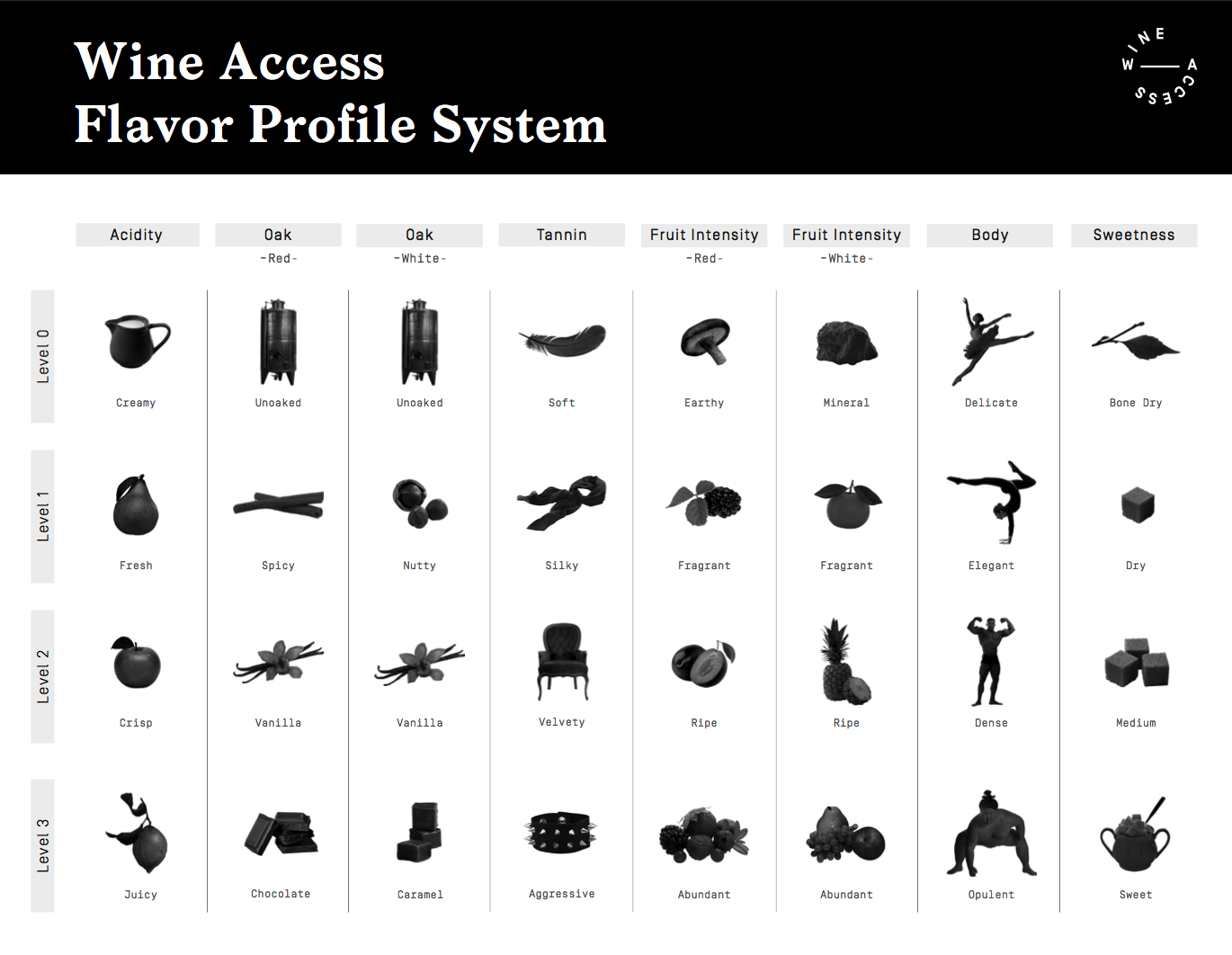
How To Describe Your Favorite Wine In 6 Words Or Less Discover Wineaccess Com
Sweetness in a wine means it contains some residual sugar measured in gl which makes it taste sweet.
. Fruit-Driven Sweet Attack Jammy Extracted Flamboyant Sweet Tannin New World Style Juicy Ripe. When a wine is creamy it melts like butter on your tongue. In the wine world sweetness is one of them.
If the smell does not disappear after the wine is poured it is an indication that the wine is faulty. Brut wines contain less than 15 percent residual sugar per liter which is more than Extra Brut but less than Extra Dry. Disagreeable odour reminiscent of rotten eggs.
Many wine authorities believe that a wine should be described as specifically as possible breaking it down into a group of flavor and aroma components that when all put together describe the. The world of wine counts with hundreds and hundreds of words to describe all sorts of things. This wine term doesnt mean that the wine is sweet it just means that they are bursting with sweet fruit smells.
But even the simplest words like dry and sweet can mislead a wine drinker. Tannins- A compound in wine that leaves a dry bitter and puckery feeling in the mouth. Whatever your level of understanding of this complex and fascinating universe there is vocabulary that you should definitely know and.
Grapes with more sugar higher brix is the technical phrase have the potential to make sweeter wines or to make higher alcohol wines. Tannins the phenolic compounds in wines that leave a bitter dry and puckery feeling in the mouth. Tartaric acid the principal acid in.
These terms can get confusing quickly because sweetness sensitivity varies from person to person and because sometimes a wine can be technically dry but give the impression of being sweet because the grapes were very ripe or the oak barrels imparted a sense of sweetnesslike a caramel or cream soda noteto the wine. In the wine world sweet is one of those inappropriate words your mother warned you about. The word Crisp with wine is more often used to describe a white wine.
Yet for many consumers particularly those new to wine it is a description that is often misunderstood and as a result misused. Yet for many consumers particularly those new to wine it is a description that is often misunderstood and misused. Sweet- A wine having a noticeable sense of sugar contents on the nose and in the mouth.
Having a high content of residual sugar either from the grape itself or as the product of arrested fermentation. You can easily distinguish different flavors like fruitiness or spiciness in excellent wines. Dense is favored for use in bold red wines such as.
But flinty is a word used to describe white wines while wet gravel is more likely found in descriptions of red wines especially ones made with Cabernet Franc or. It has its appropriate time and place. Creamy is generally used to describe white wines or champagne.
Sec- French word for dry wine. But fresh not a word often used for wine in the United States has different connotations in China. DENSE When a wine writer pares down his lengthy description of flavors and characteristics of a wine into one word he uses dense.
The smell of a wine is often referred to as its nose Words used to describe it are. Sweet also seems to be a. This is the only wine descriptor on this list that is 99 guaranteed to indicate a flaw in the wine.
The smell is caused by bad chemicals the 246-trichloroanisole TCA and 246-tribromoanisoleTBA chemicals to be exact. Not because it is a dirty word. This is the most commonly used term to describe a wine with dominant flavors in the sweet fruit realm.
Dry In wine terms dry is the exact opposite of sweet. The aroma should. The S word Sweet is not always a bad word when describing wine.
In fact these two words are sometimes the most confusing. This is true for all yeast used to make alcoholic. When we take the juice from the grapes and add yeast to convert the juice into alcohol the yeast consumes the sugar and produces alcohol as the byproduct.
Finish This is the wines aftertaste and the taste it leaves at the back of your throat. Sweet for example is not a positive unless the speaker says where the sweetness comes from. The wine aromas and flavors technical terms of viticulture enology or winemaking wine regions grape varieties and so on.
Brut- Term used to describe sparkling wine meaning dry. Are the cheaper wines out there were talking about many of the wines under 10. Fermentation stops before all the grape juice known as the must sugars have been converted to alcohol.
Sweet wines with perceptible sugar contents on the nose and in the mouth. The word xian if. A crisp wine is most likely simple but goes really well with a porch swing on a hot day.
Not because it is a bad word it does have an appropriate time and place. Supple- Not overly tannic wine. Wet dog is often used to describe the damp musty moldy smell that comes from a corked wine.
Wine is either classified as dry off-dry which is semi-sweet or merely sweet. Even if words like sweet and fresh translate directly into Chinese the connotation is different with huge implications for how a wine is perceived. The process by which wines become sweet is due to one of the following reasons.
Structured- The relationship or blend of alcohol tannins residual sugars acidity and fruit in a wine. What gives sweet wine such a bad rap here in the US. For an example you can say This wine is complex in that it begins with fruity undertones which then become smokey overtones 3.

Guide To Merlot Wine Taste Regions And Food Pairing Wine Tasting Notes Wine Folly Merlot Wine
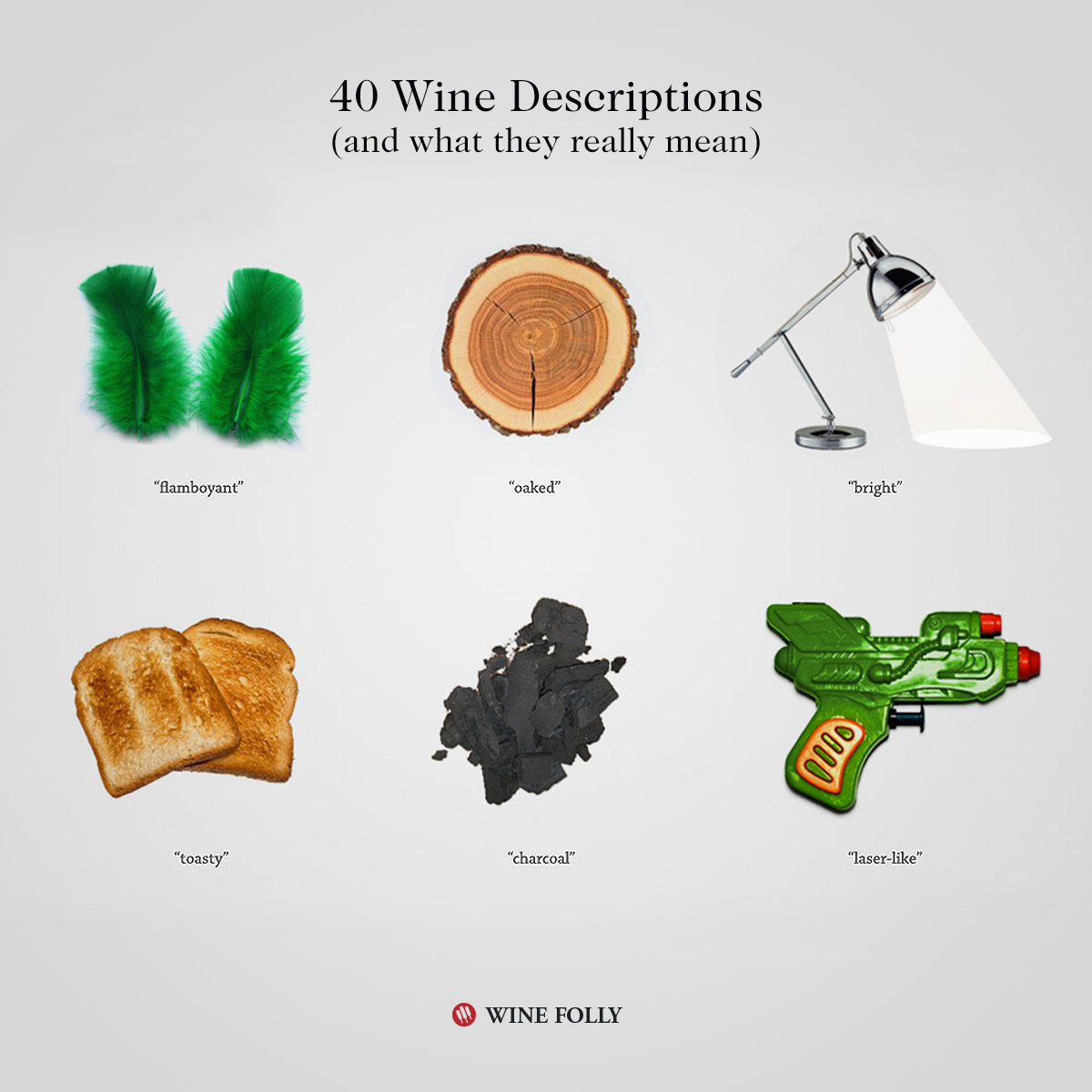
40 Wine Descriptions And What They Really Mean Wine Folly

14 Charts That Ll Help You Look Like A Bona Fide Wine Expert Wine Infographic Wine Tasting Wine Knowledge



0 Comments